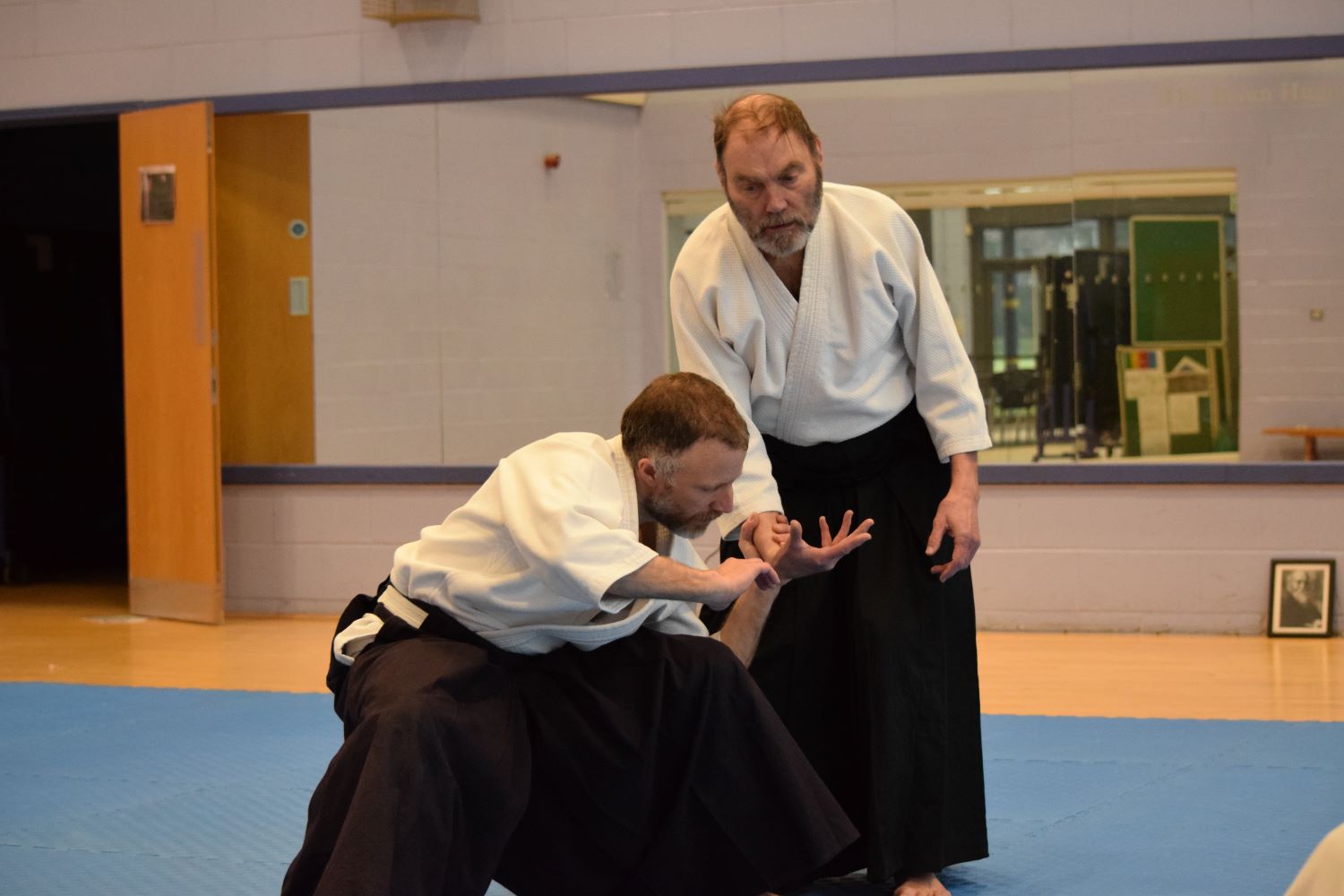
Your first grades - 5th Kyu to 2nd Kyu
Gradings, up to and including 2nd Kyu, will generally take place in the local club and be conducted by the Club Leader (Dojo Cho). There will be occasions when another Club Leader is there, in a supportive role, to the local Club Leader to fulfil the Technical Director's requirements as to who may conduct a grading.
Ukes are most likely to be chosen by the Club Leader. Occasionally, the candidate may be permitted to suggest a Uke. Generally Ukes should not be widely different in grade.
As you gain experience as a Aikidoka you will appreciate the benefit of training on our courses and visiting other Clubs, to gain new perspectives and learning to adapt to differing people quickly.
Taking ukemi in the widest sense is important.
The syllabus will list the requirements for the grade and includes all the techniques from earlier grades that you have already covered. Examiners may ask to see items to see how you perform / react.
Grading is generally by invitation from your sensei, but you can ask to grade if you feel ready and have the necessary prerequisites of hours trained (these are a minimum).
What happens in a grading
Your name is called out and you line-up in front of your Club Leader who then calls the Uke who sits alongside you.
See the Etiquette page for the formal detail - sometimes shortened and directed by the Club Leader to put you at your ease.
After the Grading, at the end of the class, the Club Leader will call out your name, you will stand up and the outcome will be announced.
The Candidate feedback sheet is usually given to you. Sometimes it is at the next practise so feedback is not rushed.